CTV News Montreal 5 p.m. Anchor Maya Johnson travelled to Jamaica to see the devastation and document the relief and rebuilding efforts after Hurricane Melissa, which made landfall on Oct. 28, 2025. This article was first published on the CTV News Montreal website.
As the Montreal-born daughter of Jamaican immigrants, I grew up navigating and embracing a blend of cultures. Eating patties, jerk chicken, and fried dumplings came just as naturally as buying fresh Montreal bagels. In high school I listened to the same music my friends were listening to, but it was really the old school reggae music I heard in my home – the records my father played on the turntable, the mix cassettes my older sisters played on the tape deck – that was the soundtrack of my coming of age. I was fascinated by the sounds that came out of Studio One in Kingston in the 60s and 70s, and the dancehall hits that played at the parties of the 80s and 90s.
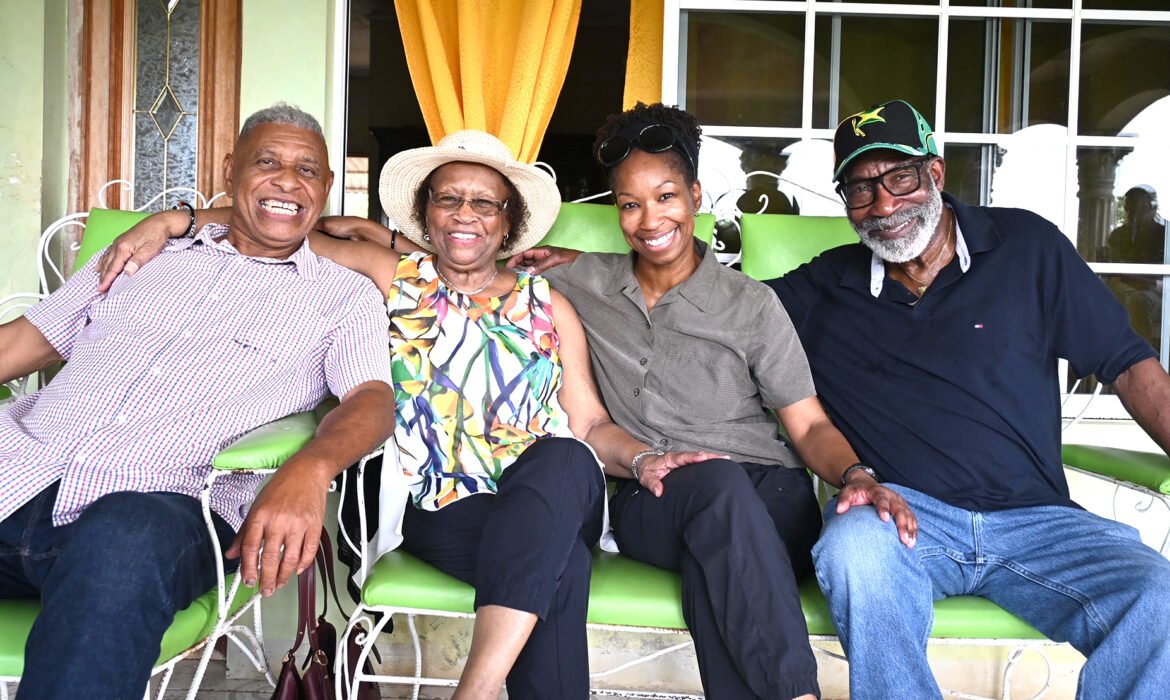
My mother brought me to Jamaica for the first time when I was 6-years-old. We went to her hometown of Balaclava, a rural community in the parish of St. Elizabeth. I didn’t return to Jamaica until my 20s. That was the first time I visited Jamaica’s capital, Kingston – my father’s birthplace. After that first trip as an adult, I was hooked. I’ve lost count of how many times I’ve been back “home” since then.
In the fall of 2024, I officially became a Jamaican citizen by descent, and the next time I travelled to Jamaica was the first time I entered the country with my Jamaican passport. It was also just two months before Hurricane Melissa made landfall.
I remember sitting at my desk in the newsroom one day, as news outlets around the world were tracking the trajectory of the storm on its approach to Jamaica. I looked at four different TV screens, and every station – whether English, French, local or international – was talking about Jamaica. That’s probably the first indication I had of how serious this was going to be. I had never seen Jamaica getting wall-to-wall news coverage.
On the day the hurricane hit, it was surreal to be sitting at the anchor desk and describing what was happening to our viewers. I wrote a script, and read the words from the teleprompter:
“Good evening, thank you for joining us. It’s being called catastrophic. Hurricane Melissa made landfall in Jamaica early this afternoon, battering the island nation with torrential rain and violent winds. It’s a category 5 storm, the worst storm ever to hit Jamaica in recorded history (…) Hurricane Melissa is slicing right across the island, from St. Elizabeth parish in the south to St. Ann parish in the north. 70% of the Jamaican population lives within 5 kilometres of the sea. Here in Montreal, the Jamaican community is on edge, worried about loved ones back home.”
While delivering the news, I was thinking of my family; my Uncle Donville – my mother’s brother – and the family home in Balaclava. The home that had belonged to my late grandmother, Gwendolyn Victoria Cole. They were directly in the path of this Category 5 storm. What was going to happen?
We had spoken to my uncle a couple of days before the hurricane hit. He warned us it could be hard to communicate after the storm. Electricity would be gone; communications would be down. For seven days the hurricane made landfall, we had no news. We couldn’t reach any family members. The anxiety was hard to bear.
Finally, we got word that everyone was okay. But they’d lost part of their roof, and there was no electricity or running water. My uncle lost his chicken coop, and his small jerk chicken shop was destroyed.
In the following days and weeks, I would get messages and videos on WhatsApp, showing a scale of destruction that was difficult to process. Every Jamaican I know – no matter where they were in the world – felt the weight of it.
I also saw Montreal’s Jamaican community mobilize in a way I’d never seen before, with fundraising and relief efforts spearheaded by the Jamaica Association of Montreal (JAM). Donations poured in. There were heaps of clothing, non-perishable food items, cleaning and hygiene products, flashlights and batteries, ready to be transported by the truckload to the port of Montreal. People opened their wallets, too. JAM presented a $22,000 cheque to the high commissioner of Jamaica to Canada, Marsha Coore Lobban.
Meanwhile, I stayed in touch with contacts on the ground in Jamaica and realized there were so many stories to be told. But after Hurricane Melissa made landfall, with the dizzying pace of the international news cycle, it seemed people had moved on. Jamaica was no longer a lead story. It was barely on the radar.
Someone living in Montego Bay told me, “It’s not the hurricane that’s the worst, it’s after the hurricane.”
She’s right. That’s where the real stories are. The stories of struggle. The stories of survival. The recovery efforts. The rebuilding. The resilience.
And those are the stories I wanted to tell.
To watch Maya Johnson’s special “Rebuilding Jamaica” series online, visit: https://www.ctvnews.ca/montreal/rebuilding-jamaica/