Salutations Everyone!
It’s my turn to say “HAPPY NEW YEAR!” I am so sorry for not writing something in the last edition. The truth is, I was so busy, and I kept telling myself, “I have to check the last Community Contact to see when the new edition comes out!” And of course, by the time I had time to check, it was too late. The new edition was coming out in two days… But I think that this is a good segue into what I want to talk about today. It’s nothing too drastically different from what I usually talk about, but I think it’s a suitable reminder, especially since it’s still early in the year.
A couple of months ago, I was asked by the Montreal Caribbean Social Organization (MCSO) to be the guest speaker at the 48th Annual Dinner and Dance Banquet. I was honoured because MCSO is one of the organizations that has been around since I was a child. Having Black community organizations withstand the test of time, and span generations, is a form of collective survival. It is rooted in care, adaptability, and a refusal to allow Black community knowledge and support systems to disappear. When I accepted the invitation, I asked Miss Campbell (the treasurer of the MCSO) what I should talk about, and she said, “The theme is ‘take time for yourself’.” Of course, I was sold!
Here is a summary of what I said that night. At the MCSO gala, I spoke about “taking time for yourself” as more than a cliché. It is survival work in Black communities that have long been conditioned to carry everyone else. I shared how watching my mother suffer a stroke in her late 40s taught me how easily exhaustion becomes normalized, and how our bodies often warn us long before they break down. I spoke about racial battle fatigue (the physical, emotional, and mental toll of constantly navigating racism and microaggressions) and weathering (the cumulative wear and tear on Black bodies caused by prolonged exposure to stress and inequity over time). I reminded the audience that trauma does not live only in the mind; it settles in the body, whispering through fatigue, tension, and anxiety before it ever screams. I closed by reframing rest as resistance, emphasizing that caring for ourselves is not indulgent or selfish, but essential for our health, our longevity, and our collective healing.
But why is it so hard for us to take our own advice? Why is it so hard for us to show ourselves the same grace that we show others? Let me elaborate…
Despite saying that I would rest more this year, I had some financial burdens dropped on me, and I was forced to work more than I set out to, all while pursuing my PhD. My parents kept urging me that I was working too hard, pointing out that to them, it seemed as though I was working 16 hours a day (they weren’t too far off)… A couple of weeks ago, I was driving my mother somewhere, and as I approached a stoplight, I suddenly started feeling dizzy and couldn’t tell what was going on. I exclaimed to my mom, and she put her hand on my shoulder and prayed. By the time the light turned green, everything stopped spinning and I could drive again. I didn’t experience a dizzy spell that intense again, but I was feeling a little bit dizzy every now and then.
Fast-forward to last week. On Wednesday, I woke up with a pain in the back of my right calf. This has happened before and usually wears off by the time I get to work, but this time it didn’t. On Friday night, I was telling my dad how much it hurt, and he said that he would rub it and put some muscle cream on it. My dad is honestly the best. But he became very concerned. He said that it didn’t feel right, and it was almost as if there was a “pouch.” He begged me to go to the hospital.
On Saturday morning, I described my symptoms to ChatGPT (this tool is useful, if used correctly!), and it urged me to go to the hospital because what I was describing sounded like a Deep Vein Thrombosis (DVT), which can be very dangerous. I packed my school bag with work because I figured I would be at the emergency for hours. But when I went to triage and told them what was going on, the nurse put me at the highest priority, and I saw a doctor within 20 minutes. The doctor ran blood tests and said my blood showed signs of clotting. He also said it was a good thing that I came when I did, because “this could have had a very different ending.”
Now I’m on blood thinners, and later on today, I have to go back to the hospital for a follow up so they can get to the root of the problem and determine how long I’ll need to stay on them. All of this feels all too familiar, because after my mother had her stroke, she was also on blood thinners. I am so thankful that this wasn’t a sad ending, but I’m disappointed in myself for knowing better and not doing better. I’m disappointed in myself for repeating history. I’m disappointed in myself for not taking time for myself.
So here is my homework for you: schedule an appointment with your doctor for a full physical. Get bloodwork done. Tell your doctor about everything that feels off or out of the ordinary. We often dismiss symptoms by saying, “At my age, that’s normal,” but the truth is, persistent pain and discomfort are not normal, and it isn’t fair to live in chronic pain. Please, take time for yourself, because if you don’t, your body eventually will.
Yours humbly and in recovery,
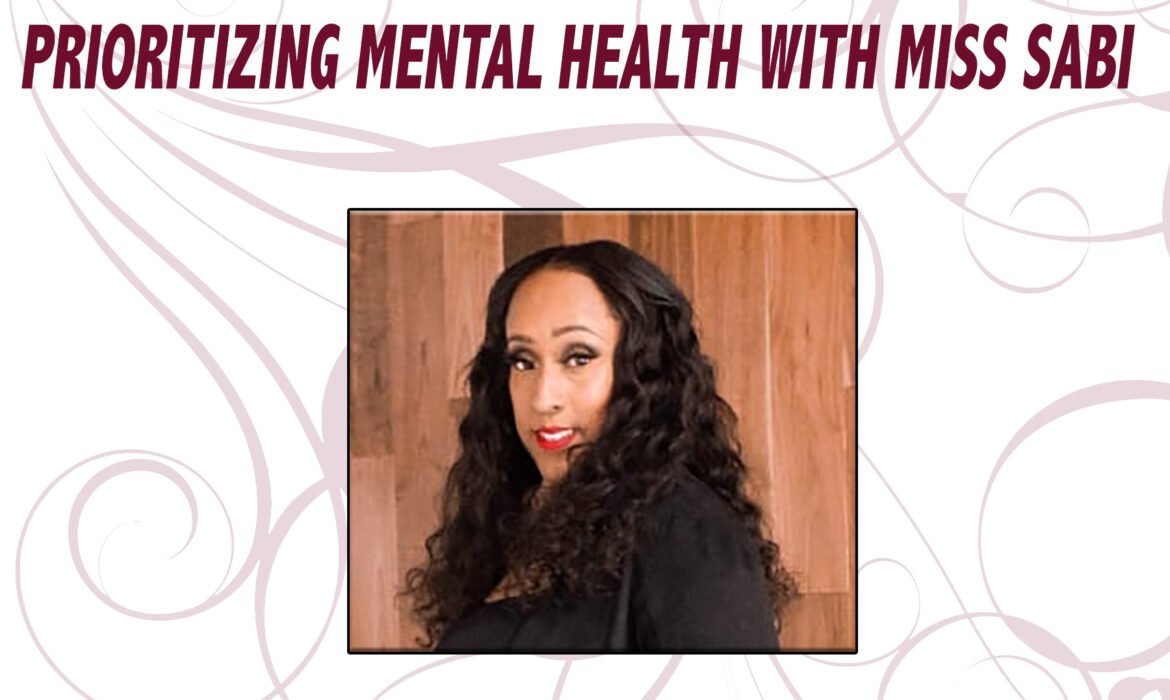
Sabi Kamilah Hinkson