By Desirée Zagbai
Visual artist Eve Tagny creates her art from organic materials like soil and plants, grounding her explorations of grief and resilience. She extracts from history to understand how violence can be politically and economically, legally structured and maintained.
“I’m interested in this idea of the real essence of people and life, how people express their culture, individuality, how they create a home, how they live their lives, and what ties them together. Also, looking into waves of dispossession and displacement, so theory helps,” Tagny said to the CONTACT.
Tagny draws inspiration from her daily photo and documentary archives. She explained that what makes her various exhibitions stay close to her heart are the ones that enhance her understanding of how she navigates the world and how it is structured.

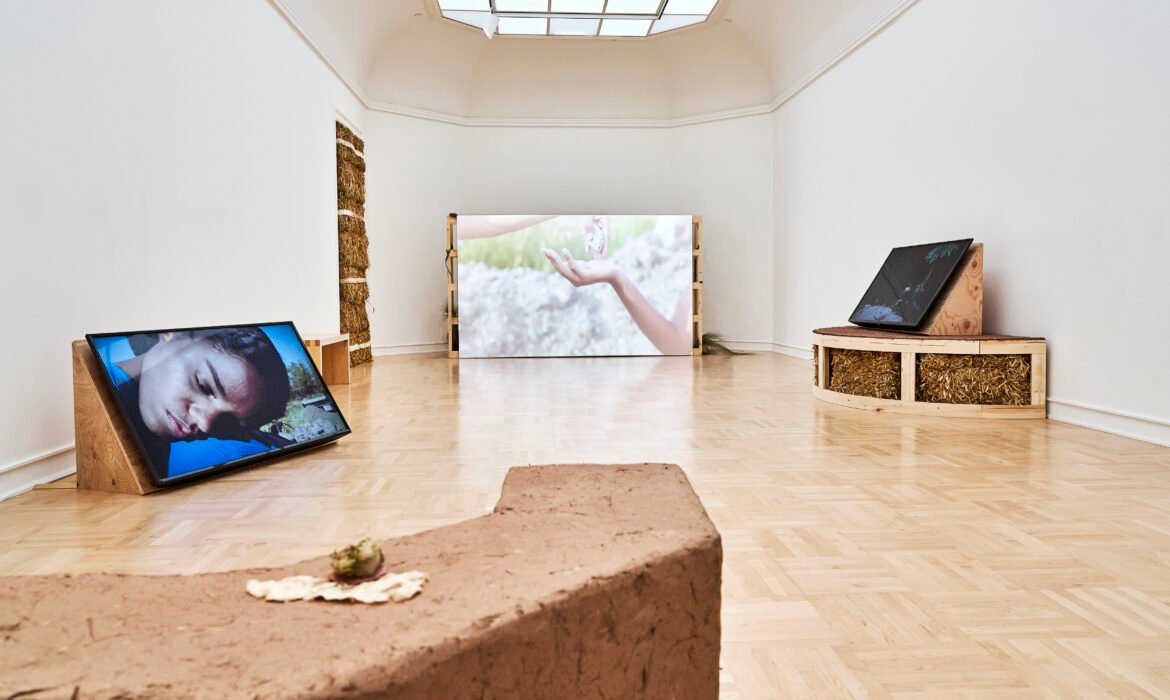
Eve Tagny, Unadorned Landscapes, installation view at Cooper Cole, 2022. Photo courtesy of Cooper Cole and the artist
“When I look at the end of my research and my questions and bring in all the elements together in one space, and I feel that they all connect and speak to one another; when I go into the room, and I feel good in it, and I feel like it’s like a space that’s open and welcomes people to have their reflections and time away from the hurdles of everyday life. When I feel like I’ve done something genuine and honest, then I’m satisfied,” Tagny said.
She explained that some challenges of working as a full-time artist could include a scarcity of resources, funds, and adequate remuneration for one’s labour; recognition of one’s work and time, financial precarity; and the absence of a work union.
“It’s very much dependent on everyone in the community, what you’ve been able to build, or what you have around you,” Tagny said.
Tagny added that various external factors can impact an artist’s journey. She said that having a formal education, such as a master’s degree or experience from art school, class status, a network, family support, or being signed to a commercial gallery can all make a difference.
Looking ahead, she aims to continue addressing politics and ongoing violence worldwide through her work by speaking about it directly.
“I think in the past years, I found it difficult because there’s such an intensification of xenophobia, racism and dismantling of women’s rights,” Tagny said. “It’s not like artists have a responsibility, but for me, at least, I want to be able to not disconnect from that and not just reflect on these times, but to engage with them in a meaningful way,” Tagny said.
Tagny’s exhibitions in June and July in Germany took place at the Freiburg Biennale and the Westfälischer Kunstverein.
People can see more of her work at: https://coopercolegallery.com/artist/eve-tagny/