This year marks 30 years since Black History Month was officially recognized and commemorated in Canada. That milestone was not given to us, nor was it handed over freely. It was fought for, advocated for, and won through courage, persistence, and conviction.
As members of the Black community, and as people of faith, we understand that remembrance is sacred. Scripture calls us to remember those who came before us, to honour their faithfulness, and to pass their stories on to the next generation. As Psalm 78:4 reminds us, “We will not hide them from their descendants; we will tell the next generation the praiseworthy deeds of the Lord.”
History records Mathieu Da Costa as the first known Black person in what is now Canada, present as early as the 1600s. A skilled interpreter and navigator, he served as a bridge between European settlers and Indigenous peoples. His presence alone reminds us that Black people were part of the Canadian story from its earliest chapters.
We endured unfamiliar winters, formed relationships, adapted, laboured, survived, and contributed. Black history in Canada is not borrowed—it is embedded in the nation’s foundation.
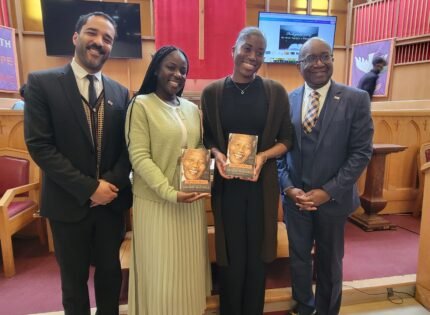
The national recognition of Black History Month exists today largely because of the unwavering work of the Honourable Jean Augustine. In 1996, as the first Black woman elected to Canada’s Parliament, she did not wait for permission or consensus, she built it.
When presenting her motion to the House of Commons, Jean Augustine spoke briefly, for roughly 35 seconds. In that short moment, she spoke of the diversity of the Black community in Canada and its essential role in the country’s history, settlement, growth, and development. The House granted unanimous consent in less than a second.
Yet that swift victory was not spontaneous. It was the result of uncountable hours of private advocacy, one-on-one conversations, and deliberate engagement with Members of Parliament long before that day. The moment was brief; the labour behind it was not.
Thirty years later, the significance of her work remains undeniable. Even more powerful is this truth: the victorious soldier who stood, spoke, and won still lives among us today—continuing to teach others, including future leaders and thinkers, how to stand, speak, and advocate with conviction.
Black history in Canada is distinct. It includes Loyalists, freedom seekers, educators, investors, faith leaders, activists, and public servants. It includes churches that became sanctuaries, families that preserved dignity when opportunity was denied, and voices that spoke truth when silence would have been easier.
Yet too often, our children do not learn this history in schools. So we must teach it ourselves, with intention, clarity, and honour.
Hebrews 11 celebrates men and women who acted in faith, often without seeing the full results of their obedience. They trusted God, stood firm, and left legacies that endured. As verse 39 reminds us, “These were all commended for their faith.”
Our Black Canadian trailblazers deserve a similar remembrance. By courage and determination, they shaped a future they might never fully see but one we now live in.
As we mark 30 years of Black History Month in Canada, let us remember rightly. Let us teach our children faithfully. And let us honour those whose conviction made it possible for us to stand where we are today.
Because Black history is not separate from Canadian history… it is Canadian history.
Black History is Canadian History