Rosie Awori – Montreal Community Contact – Local Journalism Initiative
“Until the philosophy which holds one race superior and another inferior is finally and permanently discredited and abandoned, everywhere is war.” Those words, sung by Bob Marley in War, were adapted from a speech by Haile Selassie I at the African Union. More than 50 years later, they still echo far beyond Jamaica and Ethiopia. They reach Quebec, where another battle continues, not over whether racism exists, but over whether the province is prepared to call it what many believe it is: systemic.
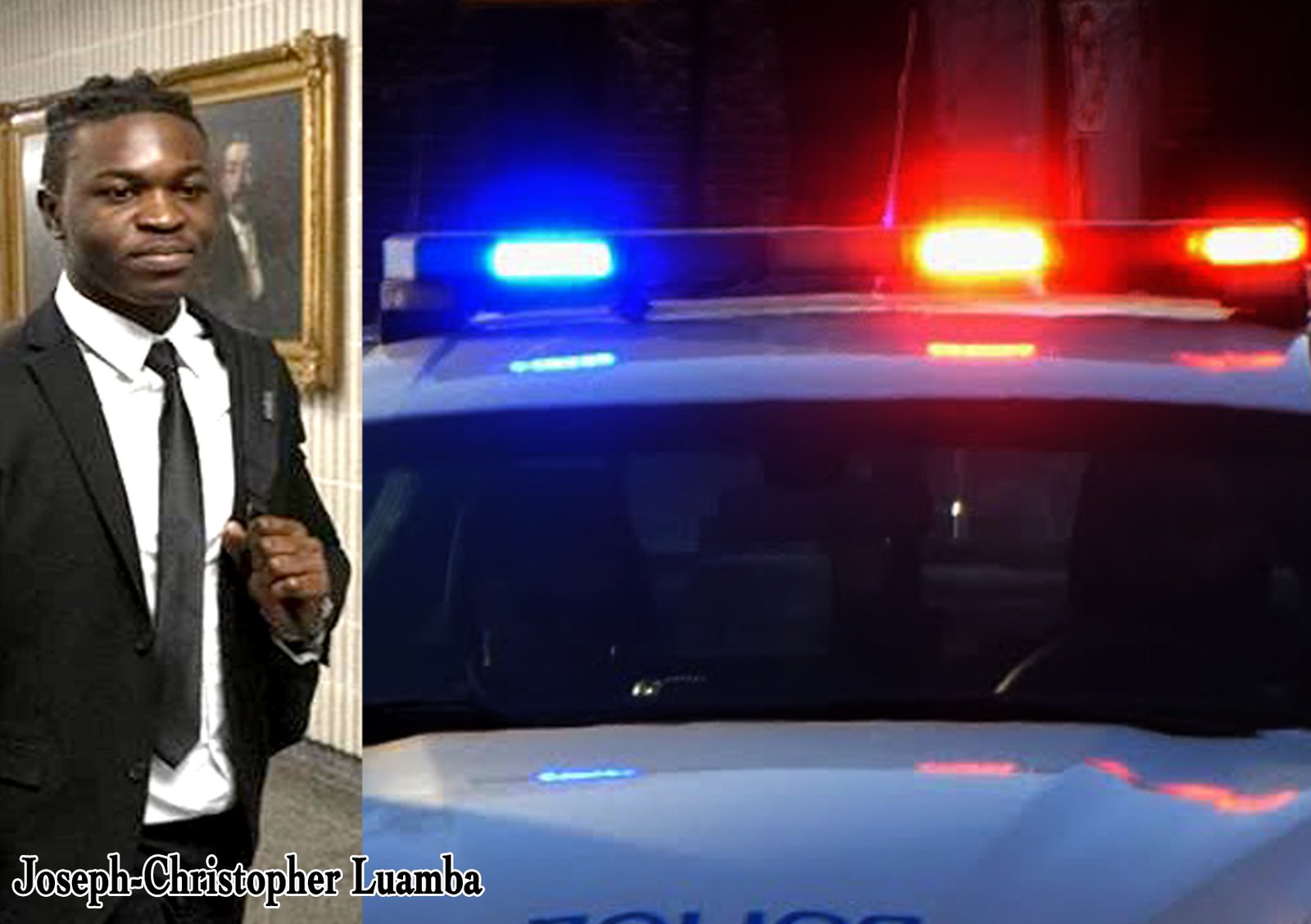
The allegations involving officers from SPVM’s Station 39 in Montréal-Nord have sparked protests, political debate and renewed scrutiny of policing in racialized communities. More troubling still was the public letter from Black police officers who described returning to work in an atmosphere of fear, isolation and uncertainty after the dismantling of the specialized patrol unit under investigation.
The letter detailed concerns about workplace culture, psychological safety, professional confidence and whether racialized officers would themselves become collateral damage in an institution attempting to repair its public image. That should concern everyone. Because if officers within the system say they are experiencing inequity, the conversation can no longer be dismissed as one between police and the public. It becomes a question about the institution itself.
As demonstrators knelt outside the station demanding accountability, Premier Christine Fréchette’s government maintained the Coalition Avenir Québec’s longstanding position that the government prefers practical action over debates about terminology. The government insists it wants to fight racism, but it refuses to describe that racism as systemic.
The SPVM leadership has also repeatedly stated that discrimination and racial profiling have no place within the police service while promising investigations whenever allegations arise.
Community leaders argue that measurable reforms must now match those commitments.
But for many in Montreal’s Black, Indigenous and other racialized communities, words matter because they shape policy, accountability and ultimately whether governments understand the problem they are trying to solve. Municipal leaders have struck a somewhat different tone. The City of Montreal has acknowledged systemic racism and committed itself to equity initiatives in recent years.
“It’s like if a doctor refused to diagnose a patient,” someone was quoted as saying. “Can he treat that patient? I think no.”
It is a question that deserves an answer.
When Anthony Griffin was killed by police in 1987, Black Montrealers demanded answers. When Fredy Villanueva died during a police intervention in Montréal-Nord in 2008, the community once again asked whether race had played a role in policing. The unrest that followed forced Quebec to confront questions many had long avoided. Then came carding, and after that came repeated allegations of racial profiling. And then the unfortunate death of Joyce Echaquan after enduring racist treatment in a Quebec hospital.
Some presented each incident as an exception. But a closer look would reveal actions that appear to follow and form a pattern. That is precisely what many scholars and human rights advocates allude to when they speak of systemic racism: not that every individual within an institution is racist, but that institutions can repeatedly produce unequal outcomes even when discrimination is subtle, unconscious or historically embedded.
Yet Quebec continues to wrestle less with the evidence than with the language itself. Some insist racism can only be considered systemic if discriminatory intent is explicitly built into laws and institutions. By that definition, Quebec does not qualify.
The courts, however, have increasingly taken another view. From decisions recognizing racial profiling in policing to findings by human rights bodies, a growing body of legal and institutional evidence acknowledges that systemic racism is not merely a slogan but a measurable social reality.
This is probably why the discourse is exhausting, asking Black and racialized communities to prove their reality, and when they do, it’s cited as an isolated incident. How isolated can it be when reports document these findings?
From stories of young Black men repeatedly stopped while driving, to professionals describing barriers in hiring despite identical qualifications, the experiences have remained remarkably consistent even as governments have changed. Same script, different cast, and the province remains trapped in an argument over vocabulary.
Some critics argue that racism can only be described as systemic when discriminatory intent is deliberately built into laws or institutional frameworks. By that definition, they contend Quebec does not qualify. Others argue this interpretation misunderstands what systemic racism actually means.
Systemic racism does not require every individual within an institution to harbour racist beliefs. Nor does it require discriminatory laws to be explicitly written into legislation.
Rather, it describes systems whose outcomes consistently disadvantage certain groups due to historical patterns, institutional cultures, unconscious biases, and structures that continue to reproduce unequal outcomes long after overt discrimination has been outlawed.
If Black motorists are disproportionately stopped by police, if Indigenous patients repeatedly report discriminatory treatment within health care, if racialized workers consistently experience hiring gaps despite equivalent qualifications, the question becomes not whether every individual intended harm, but why the outcomes remain so predictable.
The question cannot be if systemic racism exists, but if we are prepared to call it by its name.